
Email Marketing at Scale
Company: Ascend Fundraising Solutions
My Role: Lead Writer & Systems Builder
Owned copy and communication across Ascend’s multi-charity lotteries, built a repeatable email system to support national scale
The Challenge:
Email functioned as the primary revenue engine across multiple always-on lottery programs
Copywriting processes were manual, reactive, and lacked a framework for message consistency and hierarchy
Program growth outpaced process development, creating an operational risk
Sustained fundraising required an increased cadence without compromising clarity or trust
Success depended on predictable structures and faster turnaround
How it Worked:
Theory
〰️
Strategy
〰️
Framework
〰️
Email Examples
〰️
Theory 〰️ Strategy 〰️ Framework 〰️ Email Examples 〰️
Context
Ascend Fundraising Solutions runs large-scale charity lotteries. For example, Split the Pot, which brings multiple healthcare foundations together under a single monthly draw. Participants buy tickets for a chance to win early bird or grand prizes, with proceeds directed to the foundation of their choosing.
Email was, by far, the biggest revenue driver. Programs required anywhere between 30-50 emails per month. Multiply that by segment adjustments, regional differences, program nuances, and you're left with a ton of copy to write (and tendonitis).
At that volume, success depended less on writing net-new emails and more on designing a system that could support careful repetition and variation, without sacrificing speed.
Theory
When an audience is receiving a high volume of communications, two things quickly break: novelty and cohesion. New ideas lose impact faster than you’d think, and without structure, messages begin to compete with rather than reinforce each other.
At the same time, volume introduces a more obvious problem: outsized writing effort. Treating each email as a standalone piece of work becomes operationally unsustainable. Without a different approach, the effort required to produce a month's worth of emails for each program starts to consume far too large a share of time/attention.
The challenge became about designing an approach that stopped these programs from collapsing under the weight of their own growth. Repetition needed to be intentional, and variation selective.
Strategy
These improvements were step-by-step over my tenure at Ascend. New processes were built, implemented, tested, and iterated upon. I’ll now share the strategic-level decisions that were made to shape the process into what it is today. It went as follows:
Use copywriting experience to improve the overall quality/efficacy of email copy
Categorize each email by its own primary objective
Plan campaign messaging holistically — what is the story of the full (month-long) picture?
Use rigorous A/B testing, isolating one variable at a time to optimize each sequence in the campaign for engagement and conversion
I also tested the hypothesis that we can likely deploy a fair amount of month-over-month repetition without risking a negative revenue impact
Once the hypothesis was proven, I further categorized each word/sentence in an email as either static or variable (snippets)
At the campaign-level, emails were categorized into two buckets: core (high level of repeatability with snippets) and non-core (net-new)
The final decision was to break each communication down into its component parts, look for patterns, and isolate a final group of components
The blocks from which any necessary communication can be built
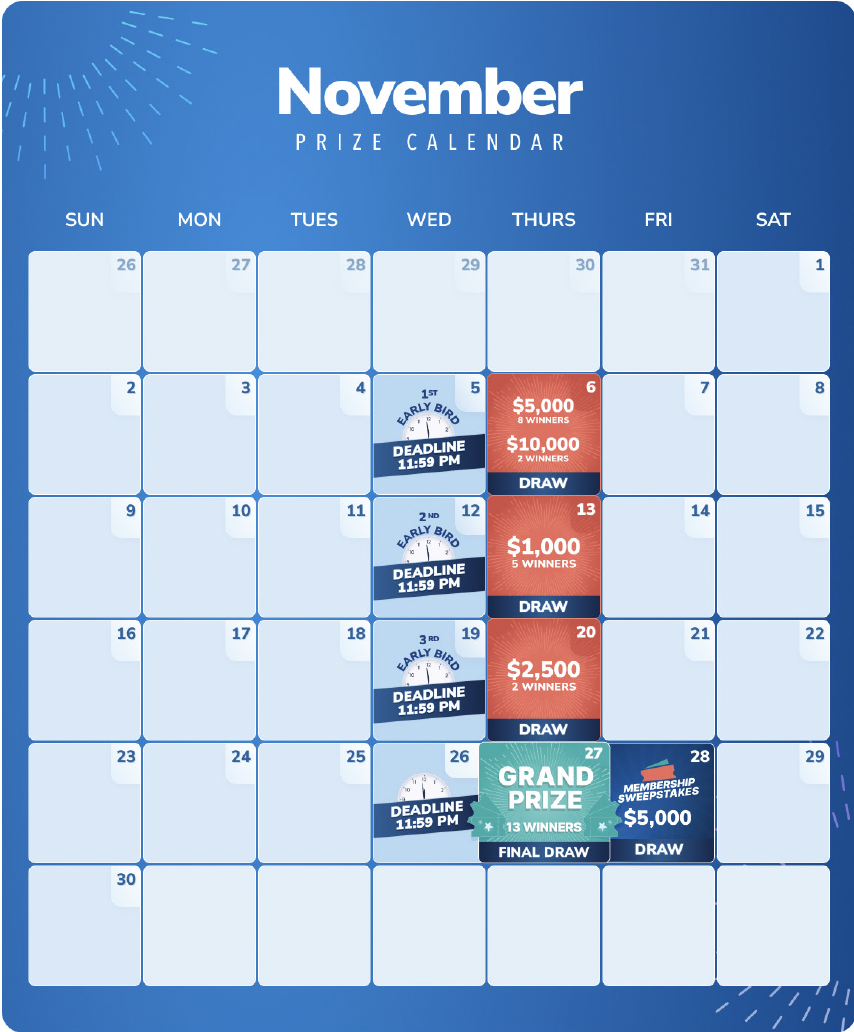
Split the Pot Ontario
November Prize Calendar
Structural Framework
Now the question is what does that strategy actually look like in practice? Without peering too far behind the curtain, here is the answer to that question:
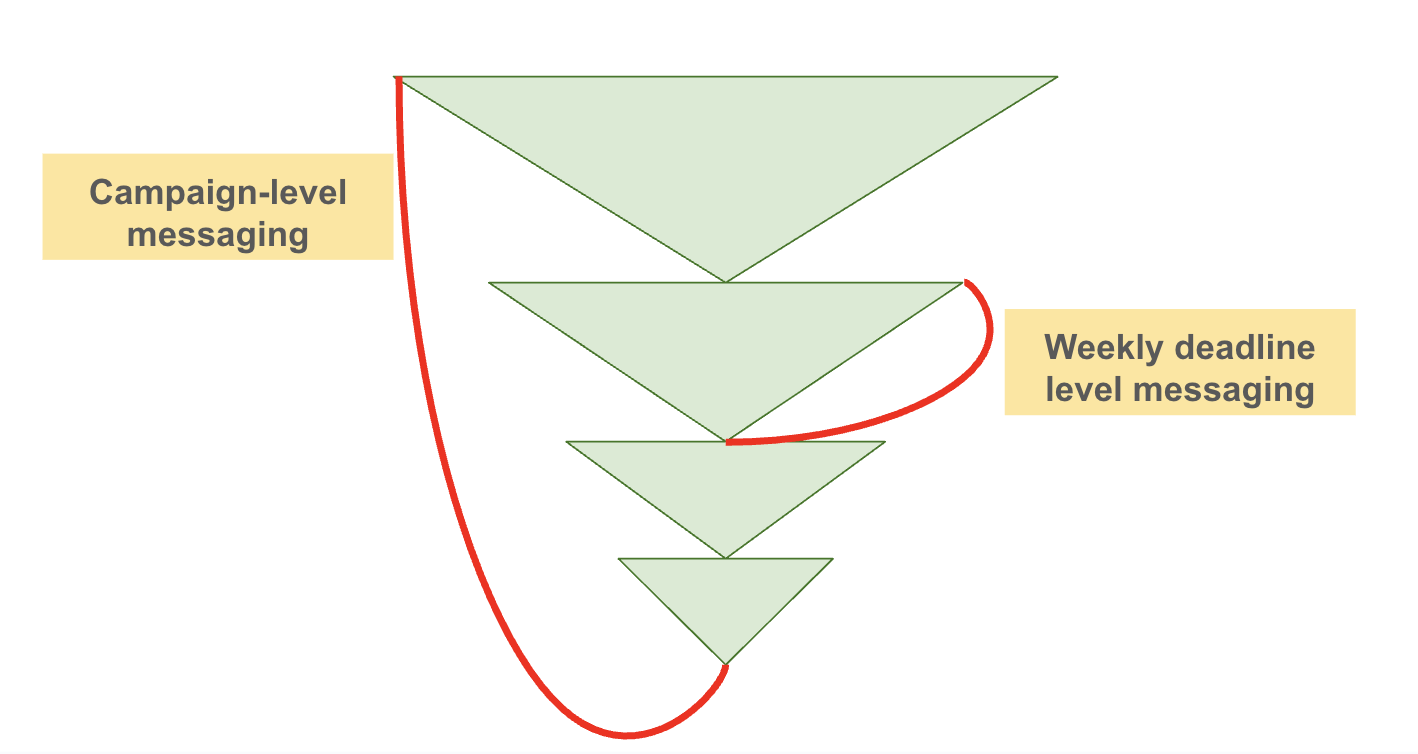
Messaging Hierarchy
Imagine this image plotted on a chart:
Each triangle’s point represents a prize deadline
The Y-Axis would be days of a campaign
The X-Axis would specificity of messaging
As we get closer to each deadline, the messaging focus narrows
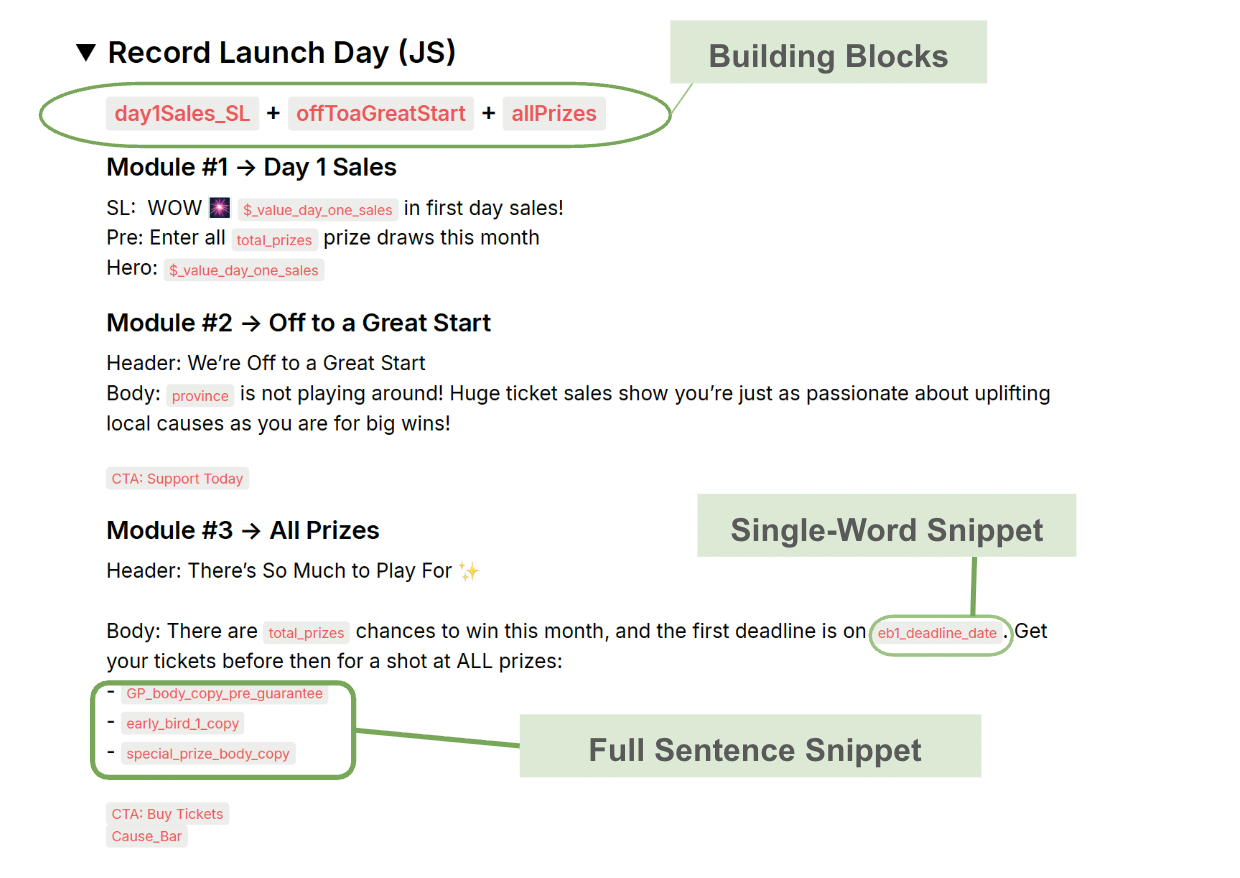
Modules & Snippets
An example of a single email (Record Launch Day), broken into 3 modules.
Copy within those modules, is broken into snippets — both single word and full sentence
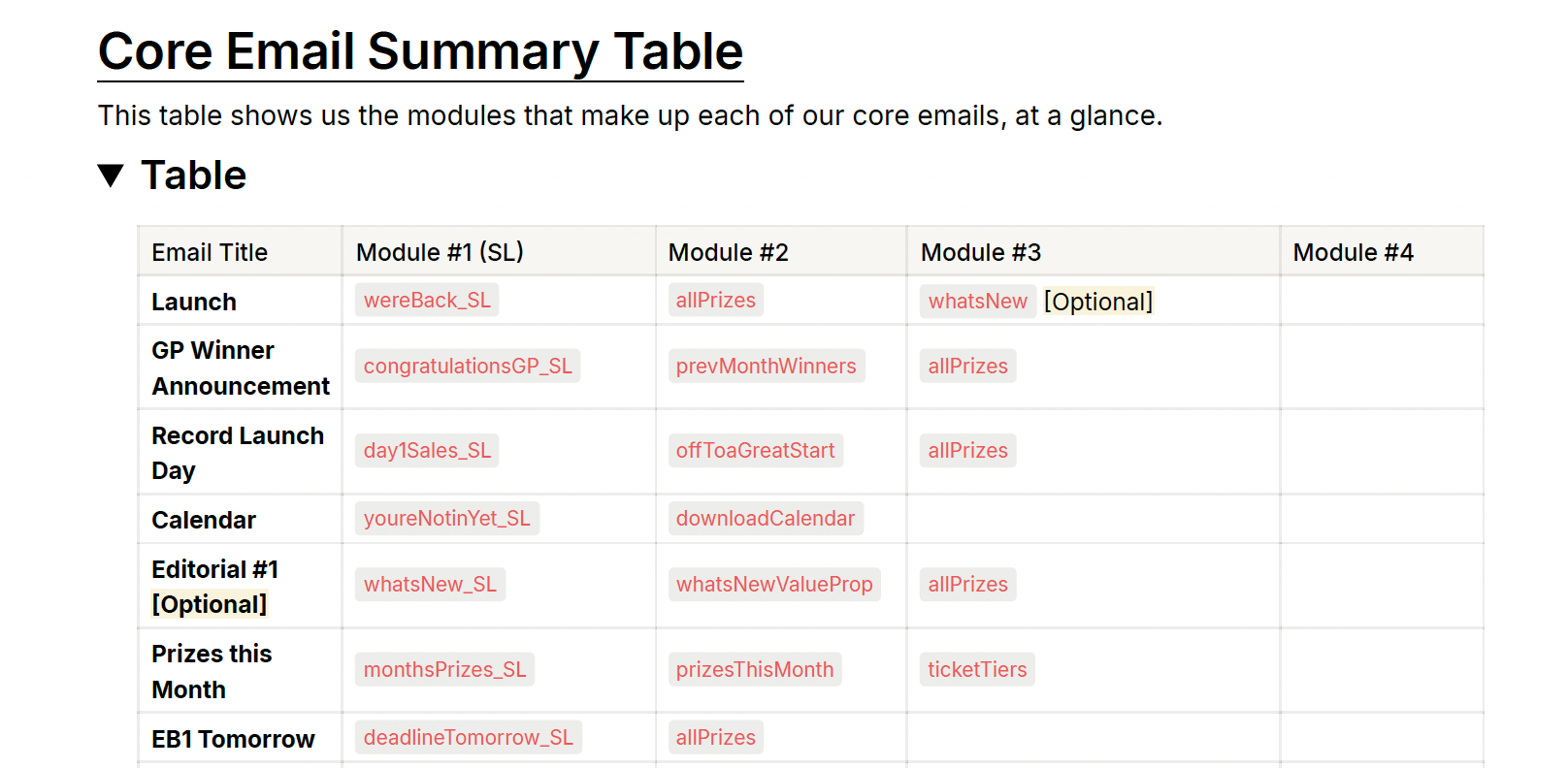
Module Summary Table
A full month’s worth of core emails are broken down into modules.
This is a sample of the first 7 (core) communications of the campaign. Note the repeated components.
Example Email Flow
The following are a few selected email examples from Split the Pot Ontario’s November campaign. It would be impractical to share the full campaign (40-ish) emails, however these examples are in sequential order and illustrate the framework I built in practice. Real emails with real results.
Launch
STP 101
Early Bird 3 Deadline Tonight
Final Deadline (Hours Left)
⬊
⬋
⬊
⬋
⬊
⬋
1st Day Sales
Early Bird 1 Deadline Tonight
Sales Almost at $1MM
Results
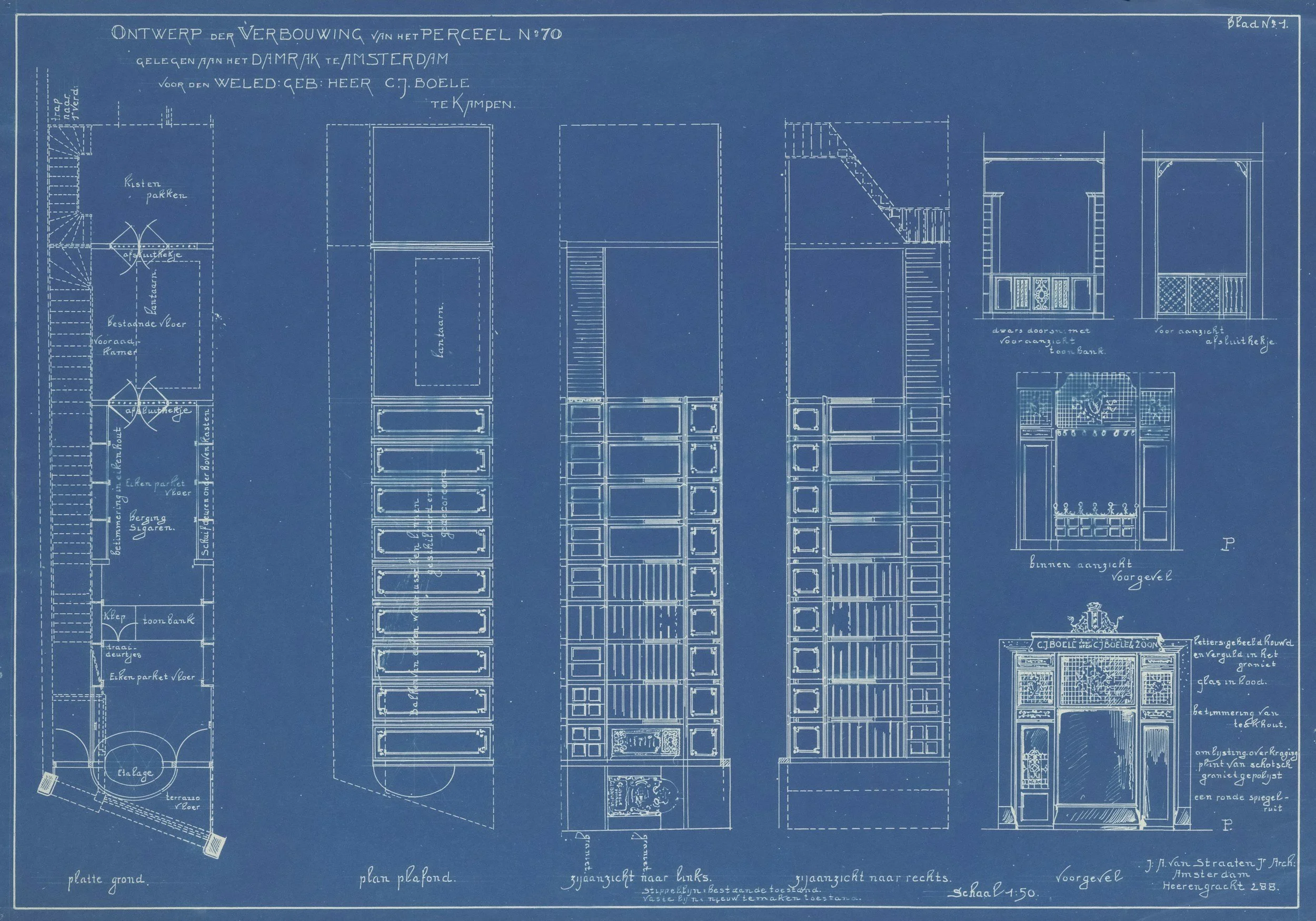
The blueprint for a scalable copywriting and email delivery system
$15-20M in multi-charity sales directly from email
Lotteries moved from Quarterly to Monthly (always-on)
Expanded from 2 programs to 6 programs across Canada